
What Is a Dental Crown and How Do You Know If You Need One?
April 28, 2026 9:00 amSometimes a tooth just starts to feel different. It might be a little more sensitive than it used to be, or you notice discomfort when you bite down in a certain spot. Other times, it’s something you can see—a tooth that looks worn, a filling that seems larger than you remember, or a small crack that catches your attention.
When that happens, the next step is figuring out what will actually protect the tooth and keep it from getting worse. In a lot of cases, that’s where a dental crown comes in.
What Is a Dental Crown?
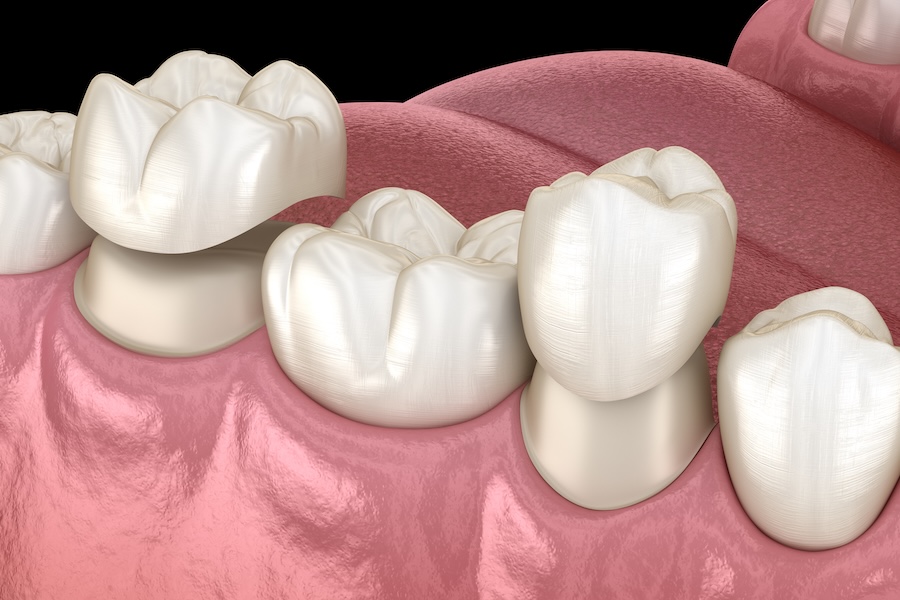
A dental crown is a custom-made restoration that covers the entire visible part of a tooth.
Instead of repairing one small area, it fits over the tooth like a protective shell. Once it’s in place, it restores the tooth’s shape, strength, and function all at once. That’s what makes it different from a filling, which only replaces a portion of the tooth.
Crowns are usually made from materials like porcelain or ceramic, and they’re designed to match the color and shape of your natural teeth. Because they’re custom-made, they don’t just look like your other teeth—they’re also shaped to fit your bite, so chewing feels normal.
How Do You Know If You Need a Dental Crown?
There isn’t just one situation where a crown is used, but there are a few patterns that come up often.
If a tooth has a large cavity, especially one that takes up a significant portion of the tooth, a filling may not be enough to support it long-term. In that case, a crown helps hold everything together instead of relying on what’s left of the natural structure.
Cracks are another common reason. Even if the crack isn’t fully visible, pain when biting or releasing pressure can be a sign that the tooth isn’t as stable as it should be. A crown helps protect it from breaking further.
Teeth that have had root canal treatment are also usually restored with crowns. After that type of procedure, the tooth can become more brittle over time, so covering it helps prevent future damage.
In some cases, it’s less about damage and more about wear. Teeth that are significantly worn down, uneven, or structurally compromised may benefit from the added support a crown provides.
Why Wouldn’t a Filling Be Enough?
Fillings work well when the damage is small and the rest of the tooth is still strong.
However, when a tooth has already lost a good amount of its structure—whether from decay, previous fillings, or wear—adding another filling can put more stress on what’s left. Over time, that increases the risk of the tooth cracking or breaking.
A crown changes how that pressure is handled. Instead of concentrating force on certain areas, it spreads it out across the entire tooth. That added support is what helps the tooth hold up during normal use, especially when chewing.
So while a filling is often the simpler option, it’s not always the more durable one in the long run.
What Does the Process of Getting a Crown Look Like?
Getting a crown is usually done over two visits, although some offices offer same-day options.
At the first visit, the tooth is prepared by removing any damaged or weakened areas. From there, it’s shaped so the crown can fit securely over it. An impression or digital scan is taken, which is used to create a crown that matches your bite and surrounding teeth.
A temporary crown is placed at that point to protect the tooth while the final one is being made.
At the second visit, the permanent crown is checked to make sure it fits properly and feels comfortable. Once everything looks and feels right, it’s bonded into place.
What Does a Dental Crown Feel Like Once It’s Placed?
After a crown is placed, most people notice that the tooth feels more solid.
If there was discomfort before—especially when biting—that often improves because the tooth is now supported. There can be a short adjustment period as your bite settles, but that usually passes quickly.
Because the crown is shaped to match your natural teeth, it shouldn’t feel bulky or out of place. Over time, it tends to blend in with the rest of your teeth, both in how it feels and how it functions.
How Long Do Dental Crowns Last?
Dental crowns are designed to last for many years, but how long they hold up depends on a few factors.
Daily habits play a big role. Brushing, flossing, and keeping up with dental visits help maintain the tooth underneath the crown. At the same time, habits like grinding, clenching, or chewing on hard objects can put extra stress on it.
With consistent care, crowns can last a long time. The goal is to protect the tooth and avoid needing more involved treatment later.
Dental Crowns in Johnson City, TN at Blue Plum Dental
At Blue Plum Dental in Johnson City, TN, Dr. David J. Miranda and Dr. Mead Lyons help patients figure out when a dental crown makes sense and when a more conservative option may still work.
If a tooth has started to feel different, or you’ve been told you might need a crown, it’s worth taking a closer look before the issue gets worse. You can call the office or schedule a visit to talk through what’s going on and what will hold up best over time.
Categorised in: Dental Crowns, Restorative Dentistry