
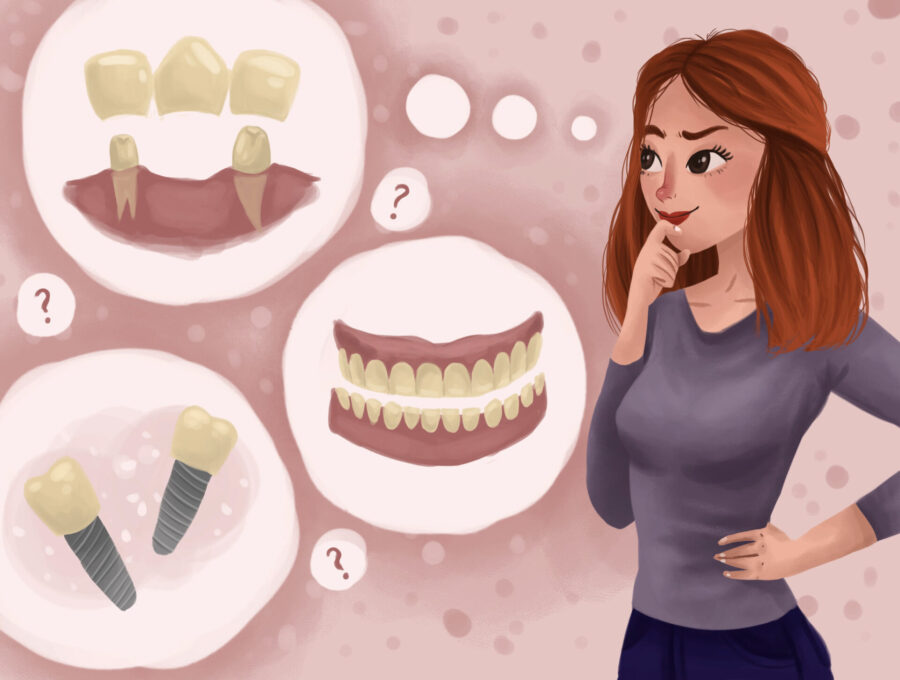
Dental Bridge vs. Denture: Which Tooth Replacement Option Is Right for You?
May 23, 2026 9:00 amMissing teeth often create a dozen small problems. Food catches in the space. Chewing feels uneven. You avoid biting into certain foods. Then, over time, you may notice that you smile differently in pictures or keep your lips closed without even thinking about it.
When you decide it is time to replace missing teeth, the choices can sound similar at first. A dental bridge and a denture both fill empty spaces, but they do it in different ways. A bridge stays fixed in place, while a denture is removable. Because of that, a bridge often works well for one missing tooth or a few teeth in the same area. A denture, however, may make more sense when several teeth are missing in different places.
At Blue Plum Dental in Johnson City, TN, Dr. Mead Lyons and Dr. Hong Tran help patients compare these options based on what is actually happening in the mouth. The best choice depends on the number of missing teeth, the health of the teeth that remain, gum and bone support, budget, comfort, and what you want daily life to feel like after treatment.
What a Dental Bridge Does
A dental bridge is a fixed tooth replacement. It uses an artificial tooth to fill the gap and is held in place by nearby teeth or dental implants. Once a bridge is placed, it stays in your mouth, so you do not remove it to clean it or take it out at night.
Most traditional bridges include crowns on the teeth beside the gap. Those crowns hold the replacement tooth in place. This can work especially well when the nearby teeth already need crowns or have larger fillings. In that case, the bridge can replace the missing tooth while also protecting the teeth being used for support.
For many people, the main appeal of a bridge is stability. Since it does not move like a removable appliance, patients often adjust to it quickly. It can also help keep nearby teeth from drifting into the empty space, which helps protect the bite over time.
However, a bridge does involve the neighboring teeth. If those teeth are healthy and have little dental work, reshaping them for crowns may not be the first choice. In that situation, your dentist may discuss an implant or another option before recommending a traditional bridge.
What a Denture Does
A denture is a removable tooth replacement. A partial denture replaces some missing teeth while fitting around the teeth you still have. A full denture replaces all teeth in the upper or lower arch.
Dentures are often useful when several teeth are missing, especially when the spaces are spread throughout the mouth. Instead of placing several separate bridges, one partial denture may replace multiple teeth at once. For some patients, that makes treatment more practical and more affordable.
Because a denture comes out, cleaning is different. You remove it, clean the appliance, and also brush your gums, tongue, and any remaining teeth. Most dentures are removed overnight as well, which gives the tissues time to rest.
Even so, dentures do require some patience at first. The adjustment period is usually the biggest difference patients notice. A denture can feel bulky in the beginning, and chewing may take practice. Speaking may feel different for a little while too. Still, a well-made denture should not keep rubbing, pinching, or slipping. If it does, it needs to be adjusted.
The Everyday Difference Between a Bridge and a Denture
The bridge vs. denture decision often comes down to how the replacement will feel in daily life. A bridge is fixed, so it tends to feel more like part of the mouth. A denture is removable, so it takes more daily handling.
For a smaller gap, especially one missing tooth, a bridge may feel more natural. You brush around it, clean underneath it with special tools, and use it for chewing without removing it. Many patients like that simplicity.
On the other hand, a denture may be the more realistic choice when several teeth are missing, especially in different areas. It can replace multiple teeth without needing every gap treated separately. It can also be adjusted or replaced later if the mouth changes.
Both options can give you teeth back, but they do not solve the problem in the same way. A bridge can be a poor choice if the support teeth are weak. However, a denture can also be frustrating if the patient strongly prefers something fixed. So, the right answer depends on the mouth, the budget, and what kind of daily routine feels manageable.
When a Bridge May Make More Sense
A dental bridge may be a good option when the missing tooth or teeth are all in one area and the nearby teeth are strong enough to support the restoration. The support teeth need healthy roots, healthy gums, and enough structure to hold crowns.
A bridge may also make sense when the teeth beside the space already need dental work. For example, if those teeth have large fillings, cracks, or older crowns that need replacement, using them to support a bridge can be practical.
Beyond the clinical side, some patients simply prefer the fixed feel. They do not want something removable, and they want to chew without thinking about taking an appliance in and out. For many people, that is a real quality-of-life factor.
Even so, a bridge needs care. Sticky foods, chewing ice, and using teeth as tools can damage dental work. Daily cleaning around and under the bridge also helps protect the teeth that hold it in place.
When a Denture May Make More Sense
A denture may be a better fit when several teeth are missing or when the missing teeth are not all next to each other. In that case, a partial denture can fill multiple spaces at once, which may make the treatment simpler than trying to restore each gap with a separate bridge.
Dentures can also be useful when the remaining teeth are not strong enough to support a bridge. If the support teeth are loose, badly decayed, affected by gum disease, or poorly positioned, a bridge may not last well.
For patients missing all teeth in an upper or lower arch, a full denture may be recommended. This can restore the appearance of the smile and improve basic chewing and speech. It will not feel exactly like natural teeth, but it can still be a helpful step forward for patients who have been struggling with failing teeth.
Cost can play a role as well. Dentures are often more budget-friendly than fixed options, especially when several teeth are involved. That does not make them the right answer for everyone, but it does make them worth discussing.
Chewing, Speaking, and Comfort
When it comes to chewing, a bridge usually feels steadier because it is attached to teeth or implants. For many patients, chewing feels more controlled with a bridge than with a removable appliance. This is especially true when the bridge replaces one tooth or a small space.
Dentures can restore chewing too, but they often require more practice. A partial denture may feel more stable because it uses remaining teeth for support. However, a full denture, especially on the lower arch, may move more because the tongue and cheeks are constantly working around it.
Speech is another part of the adjustment. If missing teeth were affecting certain sounds, speech may improve with either option. A bridge often has a shorter adjustment period. With dentures, however, reading aloud at home and giving your mouth time to adapt can help.
Comfort should improve as the restoration is adjusted and the mouth adapts. A bridge should not feel high or awkward when you bite. A denture should not create ongoing sore spots. If something rubs, clicks, shifts, or feels off, it is worth bringing up rather than trying to live with it.
Cleaning and Maintenance
A bridge stays in place, so it needs to be cleaned in the mouth. You still brush normally, but you also need to clean underneath the replacement tooth. Floss threaders, small brushes, or a water flosser may help.
The bridge itself cannot get a cavity, but the teeth holding it can, especially around the crown edges. The gums around the bridge can also become inflamed if plaque builds up. So, while a bridge is fixed, it still needs steady home care.
Dentures are cleaned outside the mouth, which makes the routine different. They should be removed and cleaned daily, and the gums and tongue should be brushed too. If you still have natural teeth, those need daily brushing and flossing as well.
Over time, both options need maintenance. A bridge may eventually chip, loosen, or need replacement if the support teeth change. A denture may need adjustments or relines as the gums and bone shift. Regular dental visits help catch those changes before they become bigger problems.
Where Dental Implants Fit Into the Conversation
Even when patients are comparing a dental bridge vs. denture, implants may come up. Implants replace missing tooth roots and can support a crown, bridge, or denture.
For example, an implant-supported bridge can replace missing teeth without using natural teeth for support. That may be helpful if the teeth next to the gap are healthy. Likewise, implant-supported dentures can add stability, which some patients prefer if a traditional denture moves too much.
However, implants are not the right fit for every patient. They require enough healthy bone, good gum health, healing time, and a larger investment. Still, they may be worth considering if you want more stability or want to avoid reshaping healthy teeth for a bridge.
Our team can explain whether implants belong in the conversation or whether a traditional bridge or denture is the better fit.
How to Decide Which Option Is Right for You
The best way to decide is to start with an exam. Dr. Tran or Dr. Lyons will look at how many teeth are missing, where the spaces are, the health of nearby teeth, gum condition, bone support, bite, and any existing dental work.
From there, the choice becomes more personal. Do you want something fixed? Are you comfortable with a removable appliance? How much chewing strength do you need in that area? Are the support teeth healthy enough for a bridge? Is cost a major part of the decision? Would implants improve the result?
In many cases, a bridge may be the better choice when the space is smaller and the support teeth are strong. A denture may be better when several teeth are missing, the gaps are spread out, or a removable option fits the budget and treatment plan better.
Still, the right option has to work in your mouth and in your regular routine. It should make sense when you are eating lunch, cleaning your teeth, speaking at work, and getting on with your day. A tooth replacement should help you feel more comfortable using your smile again, not add a new daily frustration.
Dental Bridges and Dentures in Johnson City, TN
Bridges and dentures can both help replace missing teeth, but the better choice depends on the details. A bridge may work well when the gap is smaller and the nearby teeth are strong enough to support it. A denture may be a better fit when several teeth are missing, the gaps are spread out, or a removable option makes more sense for the situation.
At Blue Plum Dental in Johnson City, TN, Dr. Mead Lyons and Dr. Hong Tran can look at your teeth, gums, bite, and bone support before recommending a direction. That exam helps take the guesswork out of the decision and gives you a clearer idea of what each option would feel like day to day.
If you are missing one tooth or several teeth, schedule a visit with Blue Plum Dental. You can talk through bridges, dentures, implant-supported options, and the kind of upkeep each one requires before choosing a plan.
FAQs
Is a dental bridge better than a denture? A bridge may feel more stable because it is fixed in place, but it is not always better. Dentures may be more practical when several teeth are missing or when nearby teeth cannot support a bridge.
Are dentures removable? Yes. Traditional full and partial dentures are removable. They are taken out for cleaning and usually removed overnight.
Does a bridge feel more natural than a denture? Many patients feel that a bridge feels more natural, especially when replacing one or two teeth. Dentures can still work well, but they usually take more adjustment.
Can implants be used with bridges or dentures? Yes. Implants can support a bridge or help stabilize a denture. Dr. Tran or Dr. Lyons can explain whether implants make sense for your treatment plan.
Image from Authority Dental under CC 2.0
Categorised in: Dental Bridges, Dentures