
When Is a Filling Enough and When Does a Tooth Need a Crown?
June 16, 2026 9:00 amHearing that a tooth needs repair usually brings up one question pretty quickly: can this be fixed with a filling, or are we talking about a crown? That question makes sense, especially when the tooth still looks normal or only hurts once in a while. From the outside, a small cavity, an old filling, and a cracked tooth can all seem like the same kind of problem. Once the dentist gets a closer look, though, they may need very different repairs.
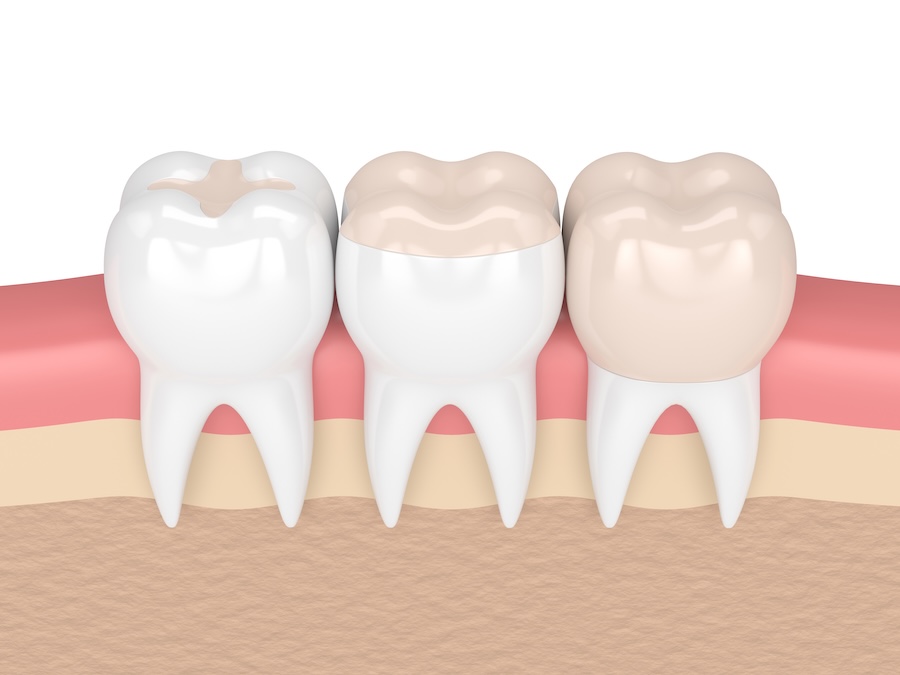
A filling repairs a smaller area of damage. It replaces the part of the tooth that has decay or a minor fracture, and then the rest of the tooth continues doing most of the work. A crown covers more of the tooth. So, when a tooth has lost too much structure, has a crack, or already has a large filling, a crown may be the stronger choice.
At Blue Plum Dental in Johnson City, TN, Dr. Mead Lyons, Dr. Hong Tran, and the team can examine the tooth, check your bite, take X-rays when needed, and explain what they are seeing. Sometimes the answer is simple. Other times, the tooth is sitting right between the two options, and the decision depends on how much healthy tooth is still there.
The Basic Difference Between a Filling and a Crown
A filling and a crown both repair damaged teeth, but they do it in different ways. A filling replaces a smaller missing section of tooth. It works well when the surrounding tooth structure is still strong enough to support the repair.
A crown covers the tooth more fully. It is usually recommended when a tooth needs more support than a filling can provide. Instead of just filling in one area, a crown wraps around the visible part of the tooth to help protect it during chewing.
So, the question is not only how big the cavity or chip looks. The dentist also has to look at how much tooth is left, where the damage is, and how much pressure the tooth handles when you bite.
That is why two teeth with similar-looking cavities may need different repairs. One may have enough structure for a filling. The other may be too weak and need a crown.
A Filling Works Best for Smaller Tooth Damage
A filling is often enough when the damaged area is small and the rest of the tooth is still strong. The dentist removes the decay or weakened tooth structure, cleans the area, and places filling material to restore the tooth’s shape. After that, the tooth should be able to handle normal chewing again.
Fillings are commonly used for small to moderate cavities, minor worn areas, and old fillings that need to be replaced. If the surrounding tooth is still solid, a filling can seal the area and keep the repair fairly conservative.
However, a filling needs something strong to hold onto. If too much of the tooth is gone, the filling may be large, but the tooth around it may still be weak. That is where a filling starts to become less useful.
So, a filling is not chosen just because it is smaller or faster. It is chosen when enough natural tooth remains to support it. If the tooth walls are thin or the biting surface is badly weakened, a crown may enter the conversation.
A Crown Is Used When the Tooth Needs More Coverage
A crown is a custom restoration that fits over the tooth. It is often recommended when a filling would not give the tooth enough support. This can happen with a large cavity, a crack, a broken cusp, or an old filling that takes up a large portion of the tooth.
When a tooth has lost a lot of structure, chewing pressure can become a problem. A filling may close the hole, but it may not protect the weaker parts of the tooth. A crown covers the tooth more fully, so it can help spread chewing force across the tooth instead of leaving one thin wall to take the pressure.
Crowns are also common after many root canals, especially on back teeth. Those teeth often already had large cavities or fillings before the root canal was done. Afterward, they may need more coverage to hold up during chewing.
A crown does not make a tooth unable to break. The tooth still needs enough support underneath. But when the remaining structure is thin, cracked, or heavily repaired, a crown may give the tooth a better chance of staying usable.
How Dentists Decide Between a Filling and a Crown
When deciding between a filling and a crown, Dr. Lyons or Dr. Tran will look at several things. The size of the cavity or fracture is one part. The tooth’s location is another. The amount of healthy tooth left, the condition of old fillings, and the way your bite comes together are also part of the decision.
X-rays can show decay between teeth, under old fillings, and near the nerve. They can also show bone levels and certain signs of infection. However, X-rays do not show every crack, so the dentist may also rely on visual signs, bite tests, and your symptoms.
During the exam, the dentist may test the tooth with cold, tapping, biting pressure, or other checks. If the nerve seems irritated, the treatment plan may need to include more than a filling or crown.
The goal is to choose the smallest repair that can still protect the tooth well. If a filling can do that, there is no reason to cover the whole tooth. If a filling would leave the tooth too weak, a crown may be recommended.
The Amount of Healthy Tooth Left Is Usually the Deciding Factor
Dentists look closely at how much strong tooth structure remains after decay, cracks, or old filling material are removed. A filling needs enough tooth around it to hold it in place. If the filling would be larger than the healthy tooth left behind, the repair may not last well.
Thin tooth walls are more likely to crack. Cusps that have lost support can break while chewing. Also, if the filling has to cover several sides of the tooth, it may act more like a patch than a long-term repair.
A crown may be recommended when the remaining tooth needs to be covered, not just filled. The crown wraps around the tooth and helps protect it from chewing forces.
This is also why the recommendation can change during treatment. A tooth may look like it needs a filling at first. Then, after the decay is removed, there may be less solid structure left than expected.
The Size of the Cavity Can Change the Plan
A small cavity can often be repaired with a filling. The dentist removes the decay, places the filling, and leaves most of the natural tooth intact. That is usually the simpler situation.
But decay does not always stay neat and small. Sometimes it spreads under the enamel or around an old filling. From the outside, the tooth may not look too bad. Then, once the damaged area is cleaned out, there may be more missing tooth structure than expected.
Large cavities can leave thin walls behind. Even if a filling can be placed, those walls may crack later when you chew. This is especially common on molars and premolars because they take more pressure than front teeth.
So, the size of the cavity is not just about how wide the dark spot looks. It is about what remains after the decay is removed. If enough solid tooth is left, a filling may work. If not, a crown may be recommended to protect what remains.
Large Old Fillings Can Push a Tooth Toward a Crown
A large old filling can hold up for years, and then suddenly the tooth starts to chip, crack, or feel different when you bite. That does not automatically mean the filling failed overnight. Often, the tooth has been under stress for a long time.
When a filling takes up a big portion of the tooth, there is less natural tooth left around it. Over time, the edges can wear down, stain, or open slightly. Then bacteria may get underneath, or the filling may start to separate from the tooth.
In other cases, the filling is still in place, but the tooth around it has become thin. Once that happens, replacing one large filling with another large filling may not be the best option. It may patch the area, but the tooth could still be at higher risk of breaking.
That is why a dentist may recommend a crown for a tooth that already has a large filling. The issue is not always the filling itself. It is often the amount of natural tooth left to support another repair.
Cracks Can Change the Repair
A cracked tooth can be hard to judge from symptoms alone. Sometimes the crack is shallow and only affects enamel. Other times, it reaches deeper and causes pain when biting, sensitivity to cold, or a sharp feeling when you release pressure.
A filling may work for a shallow crack or a small area that does not weaken the tooth much. But if the crack runs through a cusp or affects a larger part of the tooth, a crown may be recommended. Without more coverage, chewing pressure can keep flexing the cracked area.
Back teeth are especially vulnerable because they do the heavy chewing. If you clench or grind your teeth, the pressure can add up even faster. You may not feel every bit of that stress, but the tooth does.
During the exam, Dr. Lyons or Dr. Tran may use bite tests, X-rays, magnification, or other tools to check the tooth. Not every crack shows clearly on an X-ray, so your symptoms and the exam both help guide the decision.
Pain When Biting Can Be a Warning Sign
Pain when biting can point to several different problems. It may come from a cavity, a high filling, inflammation around the tooth, or a crack. The way the pain behaves can give the dentist useful clues.
For example, pain when you bite down may point one way. Pain when you release pressure may point another. Lingering sensitivity after cold or heat can suggest deeper irritation inside the tooth.
If the tooth only needs a small repair, a filling may be enough. But if the pain comes from a crack or weak cusp, a crown may be recommended because the tooth needs more support during chewing.
It is not a great idea to wait until biting pain becomes constant. Once a crack deepens or the nerve becomes inflamed, treatment may involve more than a filling or crown. In some cases, root canal therapy may be needed before the tooth can be restored.
Back Teeth Often Need More Support Than Front Teeth
Molars and premolars do the heavy work. They crush, grind, and chew food, so repairs on these teeth deal with more pressure than repairs on front teeth. Because of that, a large filling on a back tooth may not hold up well if the tooth is already weak.
A small filling on a molar can work well when plenty of natural tooth remains. But if a large part of the biting surface is damaged, a crown may be a better fit. The crown can cover the chewing surface and help distribute pressure more evenly.
Front teeth have different demands. They help bite into food and shape speech, but they do not grind food the same way molars do. So, depending on the size and location of the damage, bonding or a filling may work well.
Even so, location is only part of the decision. A front tooth with a deep crack may need a crown, while a back tooth with a small cavity may only need a filling.
A Tooth With a Root Canal Often Needs a Crown
After a root canal, the inflamed or infected tissue inside the tooth is removed. The inside of the tooth is cleaned, filled, and sealed. The tooth can still function, but it often needs protection afterward.
Back teeth usually need crowns after root canal therapy because they handle heavy chewing forces. Also, many of those teeth already had large cavities, cracks, or old fillings before the root canal was done. A filling alone may not give the tooth enough support.
Front teeth are a little different. If a front tooth has plenty of structure left and does not take the same chewing pressure, a filling may be enough. However, if the tooth is weakened, fractured, discolored, or heavily restored, a crown may still be recommended.
At Blue Plum Dental, Dr. Lyons or Dr. Tran can look at the tooth’s location, remaining structure, and bite pressure before recommending a filling or crown after root canal treatment.
When a Chipped Tooth Needs a Filling or Crown
A chipped tooth does not always need a crown. If the chip affects only a small part of the enamel and the tooth is otherwise strong, a filling or bonding material may be enough to repair the shape.
This is common with small front-tooth chips or minor edge wear. The dentist can smooth the area, add tooth-colored material, and blend it with the natural tooth. The repair may not be as strong as natural enamel, but it can work well when the chip is small and the bite is not putting too much pressure on it.
A crown may be needed if the chip is large, reaches deeper into the tooth, exposes the nerve, or weakens a major part of the biting surface. If the tooth already has a large filling, the chip may also be a sign that the tooth needs more support than another small repair can offer.
So, the size of the chip is only part of the decision. Dr. Lyons or Dr. Tran also has to look at where it is, how you bite, and how much healthy tooth remains.
A Crown May Be Needed When a Tooth Keeps Breaking
A tooth that keeps breaking is usually not asking for the same repair again. Maybe the filling chips. Maybe a corner breaks off. Maybe the tooth feels fine until one normal bite causes another piece to crack.
In that situation, placing another filling may not fix the reason the tooth keeps failing. The problem may be weak tooth structure, an old large restoration, clenching, bite pressure, or a crack that continues to spread.
A crown can cover and protect the tooth more fully. Instead of just repairing the broken corner, the crown changes how chewing pressure moves across the tooth.
However, if the crack runs too deep, even a crown may not be enough. That is why the tooth needs to be examined before deciding on treatment. Repeated breakage should be checked before the tooth loses more structure.
The Bite Can Affect Whether a Filling Will Hold Up
Your bite affects every repair in your mouth. If one tooth takes too much pressure, a filling may chip, wear down, or break away sooner. In that case, a crown may be recommended because the repair has to handle stronger forces.
Grinding and clenching make this even more complicated. Many people clench while sleeping and do not realize it until they notice worn teeth, cracked fillings, jaw soreness, or repeated dental repairs. If a tooth already has a large filling and heavy bite pressure, it may be more likely to crack.
During your visit, Dr. Lyons or Dr. Tran may check how your teeth come together. If a new filling or crown is placed, the bite is adjusted so the repaired tooth does not hit too hard.
If grinding is part of the problem, a night guard may be recommended. Otherwise, the same pressure that damaged the tooth once may damage the new repair too.
Why a Crown Recommendation Can Be Surprising
A crown recommendation can catch people off guard when the tooth does not hurt. But pain is not the only sign that a tooth is weak. A tooth can have a large old filling, a deep cavity, or a crack and still feel mostly normal.
Pain often shows up later, after the nerve becomes irritated or a crack spreads. By then, the repair may be more complicated. So, a crown recommendation may come from what the dentist sees structurally, not from how much discomfort you have.
That can be frustrating if you expected a simple filling. Still, the recommendation is usually based on whether the tooth can handle chewing after the damaged area is removed.
If you are unsure, ask what makes the tooth better suited for a crown. You can ask how much structure is left, whether there is a crack, how large the existing filling is, and what could happen if a filling is placed instead.
What Happens During a Filling Appointment?
During a filling appointment, the dentist numbs the tooth, removes decay or damaged material, cleans the area, and places filling material. Tooth-colored composite is often used because it can blend with the natural tooth.
After the filling is shaped, the dentist checks your bite. This step is easy to underestimate, but it can affect how the tooth feels afterward. A filling that sits too high can cause soreness when chewing.
Most filling appointments are fairly straightforward, especially for smaller cavities. You may have some numbness for a few hours afterward, and the tooth may feel mildly sensitive for a short time.
If sensitivity lingers, gets worse, or turns into pain when biting, call the office. Sometimes a bite adjustment is needed. Other times, the cavity may have been deeper than expected and the tooth needs another look.
What Happens During a Crown Appointment?
A crown usually takes more planning than a filling. The dentist reshapes the tooth so the crown can fit over it. If the tooth is broken down or missing too much structure, a buildup may be placed first to give the crown support.
Then impressions or digital scans are taken so the crown can be made to fit your tooth and bite. In many cases, a temporary crown is placed while the final crown is being made. During that time, sticky or hard foods can pull on the temporary crown or loosen it.
When the final crown is ready, the dentist checks the fit, color, shape, and bite before cementing it. After placement, the crown should feel stable when you chew, although it may take a short time to get used to the shape.
If your bite feels high or the crown feels uncomfortable after the numbness wears off, call Blue Plum Dental. A small adjustment may be needed.
Can You Choose a Filling Instead of a Crown?
You can ask about your options. If a crown is recommended, ask whether a filling is possible and what the tradeoff would be. Sometimes a filling can be placed as a more conservative repair. Other times, it may leave the tooth at higher risk of breaking.
If the tooth is close to needing a crown, a large filling may work for a while. However, it may not protect the tooth as well. If the tooth breaks later, the next repair could be more involved, and in some cases, the tooth may become harder to save.
Cost and timing can affect the decision too. If you need to delay a crown, tell the dentist. The team can explain what can wait, what should not wait, and whether a temporary repair makes sense.
The decision is easier when you understand the tradeoff. A filling is smaller and less involved. A crown offers more coverage when the tooth is already weakened.
Filling or Crown in Johnson City, TN
Choosing between a filling and a crown comes down to how much tooth structure is left, where the damage is, how the tooth handles chewing pressure, and whether cracks or old restorations are involved. A filling may be enough for small to moderate damage. A crown may be needed when the tooth needs more coverage and support.
At Blue Plum Dental in Johnson City, TN, Dr. Mead Lyons, Dr. Hong Tran, and the team can examine the tooth and explain what they see. If a filling is enough, they can repair the smaller area. If a crown is the better option, they can explain why the tooth needs more coverage.
If you have a cavity, cracked tooth, broken filling, or tooth that keeps chipping, schedule a visit with Blue Plum Dental. An exam can help you find out whether a filling or crown is the right repair before the tooth becomes harder to treat.
FAQs
How do I know if I need a filling or crown? You may need a filling if the damage is small to moderate and enough healthy tooth remains. A crown may be needed if the tooth is cracked, heavily filled, weakened, or missing too much structure.
Can a large cavity be fixed with a filling? Sometimes a large cavity can be fixed with a filling, but not always. If the cavity leaves thin or weak tooth walls behind, a crown may be recommended to protect the tooth.
Why would a dentist recommend a crown instead of a filling? A dentist may recommend a crown when a filling would not give the tooth enough support. This can happen with large cavities, cracked teeth, old fillings, root canal-treated teeth, or teeth that keep breaking.
Does needing a crown mean the tooth is infected? No. A crown does not automatically mean the tooth is infected. A crown may be recommended because the tooth is weak or damaged. If the nerve is infected or inflamed, root canal therapy may also be needed.
Can I wait to get a crown if the tooth does not hurt? It depends on the tooth. Some teeth can be monitored for a short time, while others may break if treatment is delayed. If a crown has been recommended, ask your dentist what could happen if you wait.
Is a crown stronger than a filling? A crown covers more of the tooth and can provide more support when the tooth is weak. A filling works well for smaller repairs, but it does not protect the tooth in the same way when a lot of structure is missing.
Categorised in: Dental Crowns, Dental Fillings, Restorative Dentistry